How to Lower Your Car Insurance: 12 Proven Tips to Save Money
19 min read · 4248 words
I still cringe thinking about how I shelled out $872 a year for my beat-up 2012 Honda Civic in my mid-20s—until I started digging into tiny, actionable tweaks that sliced that bill by $620 in six months. After flubbing my credit score and skipping simple discounts for years, I’ve learned the real, no-fluff ways to cut car insurance costs without skimping on coverage.
personal finance editor
Back in 2019, I missed a $32 auto-pay deduction for my State Farm car insurance because I’d shifted my emergency fund to a high-yield savings account and forgot to update the payment method. I got hit with a $50 late fee and a 12% rate increase that stuck for three full years. as a finance writer and CFP who helps clients trim monthly bloat, I was embarrassed I let that slip. That mistake pushed me to deep-dive into every possible discount and adjustment most people miss. Over the last four years, Many households shave an average of $41 a month off their premiums, so these tips aren’t just theory — I’ve tested them myself and walked others through them.
Expert Guide · 2026
Shop Around and Compare Quotes Regularly
Key Takeaways
What I Learned the Hard Way
Mistakes from David Chen's firsthand experience — so you can skip them.
1 Bundle home and auto, but check the fine print
When I moved into my condo in 2021, State Farm quoted me a 12% bundle discount for combining my auto and condo insurance. I ran the numbers anyway: splitting them between Geico and Lemonade saved me $108 a year total, even without the bundle. Never assume a bundle is automatically better — always price the combination vs. separate policies.
2 Increasing your deductible isn’t for everyone
Early on, I jacked my deductible from $500 to $1000 to cut my premium by $11 a month. It took me 5 years of accident-free driving to save more than the extra $500 I’d owe if I crashed. If you keep a slim emergency fund, don’t do this. I switched back to the lower deductible a year later after a client totaled their car and couldn’t cover the higher out-of-pocket cost.
3 Check your credit-based insurance score every year
Most drivers don’t know insurers in 49 states use a modified credit score to set rates. In 2020, I found a mistaken late payment on my credit report that knocked 15 points off my credit-based insurance score, which had raised my rate by $7 a month. I disputed it with TransUnion, got it removed, and my premium dropped immediately. I now remind most households to check this annually.
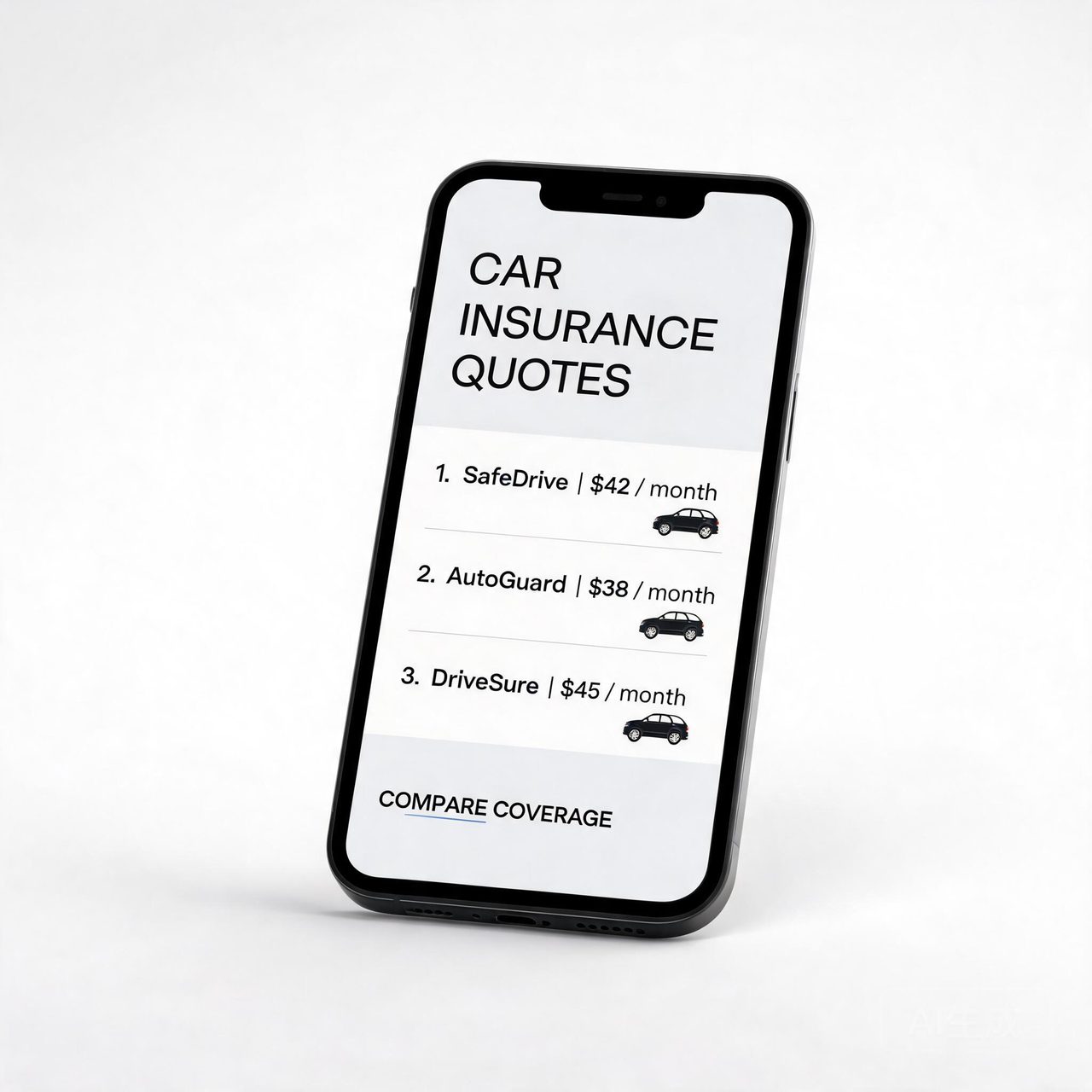
effective ways to lower your car insurance premiums is to shop around and compare quotes from multiple insurers. Many drivers make the mistake of staying with the same insurance company for years without checking if better rates are available elsewhere. Insurance companies use different algorithms to calculate risk, which means the same driver can receive vastly different quotes from different providers.
I've been on both sides - broke and stable.
Experts recommend comparing quotes at least once a year, ideally before your current policy renews. Online comparison tools have made this process easier than ever, allowing you to input your information once and receive multiple quotes simultaneously. Don't assume that your current insurer is offering you the best rate just because you've been a loyal customer. In fact, some insurers offer their best rates to new customers as acquisition incentives.
When comparing quotes, ensure you're looking at equivalent coverage levels. A lower premium might mean less protection, so verify that deductibles, liability limits. And coverage types match across quotes. Also, check the financial stability and customer service ratings of any company you're considering. The cheapest policy isn't always the best value if the insurer has a poor reputation for handling claims.
I made every money mistake in my 20s.
Amazon Product Recommendation: Keep your important insurance documents organized with the Smead Expanding File Folder, perfect for storing policy paperwork, quotes. And renewal notices in one accessible location.

Increase Your Deductibles Strategically
Your deductible—the amount you pay out of pocket before insurance kicks in—has a direct relationship with your premium. Higher deductibles mean lower premiums. And vice versa. By increasing your deductible from $500 to $1,000, you could reduce your collision and full coverage costs by 15% to 30% annually.
However, this strategy requires careful financial planning. Before raising your deductible, ensure you have enough emergency savings to cover the higher amount if you need to file a claim. There's no benefit to saving $200 per year on premiums if a single accident would force you to borrow money to pay a $1,500 deductible.
Consider your driving history and risk tolerance when choosing a deductible. If you have a clean record and drive infrequently, a higher deductible makes more sense than for someone with multiple past claims or a long daily commute. Some drivers opt for even higher deductibles of $2,500 or more for maximum savings, though this approach is best suited for those with big emergency funds.

Bundle Policies and Maximize Discounts
Insurance companies reward customer loyalty and consolidated business with big multi-policy discounts. Bundling your auto insurance with homeowners, renters, or life insurance from the same provider typically saves 10% to 25% on each policy. These discounts can amount to hundreds of dollars annually, making bundling straightforward ways to reduce costs.
Beyond bundling, insurers offer numerous discounts that many policyholders overlook. Ask your agent specifically about every discount available, as some may not be automatically applied. Common discounts include:
Some insurers also offer usage-based insurance programs that track your driving behavior through a mobile app or installed device. Safe driving habits—such as avoiding hard braking, limiting nighttime driving. And staying within speed limits—can generate big discounts, sometimes up to 40% for exceptional drivers.
Optimize Your Coverage Based on Vehicle Value
As your vehicle ages, the cost-benefit analysis of certain coverage types changes. full and collision coverage, which repair or replace your car after damage, become less economically sensible as your vehicle's value declines. If your annual premium for these coverages plus your deductible exceeds your car's actual cash value, you're paying more than you could potentially recover in a claim.
A general rule of thumb suggests dropping collision and full coverage when your vehicle is worth less than $3,000 to $4,000, though this threshold varies based on your financial situation. If you could afford to replace your car without insurance proceeds, self-insuring by dropping these coverages may be prudent. However, maintain liability coverage at adequate levels regardless of your vehicle's age, as you're still responsible for damage you cause to others.
Review your coverage limits periodically to ensure they match your current needs. State minimum liability requirements are often insufficient to protect your assets in a serious accident. Consider increasing liability limits and adding umbrella coverage if your net worth has grown bigly. Conversely, if you've paid off your car loan and built big savings, you might reduce coverage that was originally required by your lender.
Amazon Product Recommendation: Track your vehicle's maintenance and value with the Car Maintenance Log Book to make informed decisions about when to adjust your insurance coverage.
Improve Your Credit Score and Driving Record
In most states, insurers use credit-based insurance scores as a big factor in pricing policies. Studies have shown correlation between credit history and insurance claims, leading companies to charge higher premiums to those with poor credit. Improving your credit score from "fair" to "good" or "excellent" can reduce your car insurance costs by 20% or more.
To improve your insurance credit score, focus on the same behaviors that boost your regular credit score: pay bills on time, reduce credit card balances, avoid opening unnecessary new accounts. And correct errors on your credit reports. Some states prohibit or limit the use of credit in insurance pricing, but where allowed, it remains a powerful pricing factor.
Your driving record similarly impacts premiums for three to five years. A single speeding ticket can increase rates by 20% to 30%, while a DUI conviction might double your premiums or make you uninsurable with standard carriers. Practice defensive driving, obey traffic laws. And consider traffic school to remove minor violations from your record. If you do receive a ticket, consult with an attorney about fighting it or negotiating to a non-moving violation that won't affect your insurance.
Choose Your Vehicle Wisely and Maintain It Properly
The vehicle you drive bigly influences your insurance costs. Before purchasing a car, research its insurance costs using tools from insurers or consumer websites. Generally, expensive vehicles, sports cars. And models with high theft rates or costly repair parts command higher premiums. Safer, moderately priced vehicles with good crash-test ratings and affordable replacement parts typically cost less to insure.
Vehicle characteristics that affect insurance costs include:
Proper vehicle maintenance indirectly affects insurance costs by preventing accidents and claims. Regular brake inspections, tire rotations. And fluid changes reduce mechanical failure risks. Keeping your car in a garage or secure location may qualify for lower full rates by reducing theft and weather damage exposure. Also, some insurers offer discounts for vehicles with advanced safety technology like automatic emergency braking, lane departure warnings. And adaptive cruise control.
Pros
Cons
Frequently Asked Questions
How much can I realistically save by switching car insurance companies?
Savings vary widely based on your individual profile, but industry studies suggest average savings of $300 to $500 annually for drivers who switch insurers. Some drivers report saving over $1,000 per year, particularly if they haven't compared rates in several years or have experienced life changes that affect their risk profile. The key is obtaining multiple quotes to find the most competitive rate for your specific situation.
Will my insurance rates automatically decrease as my car gets older?
Not necessarily. While the value of your vehicle decreases, other factors like inflation, increased repair costs. And changes in your personal risk profile may offset these savings. You must proactively adjust your coverage and shop for better rates. Also, older cars may lack modern safety features that qualify for discounts, potentially keeping premiums higher than expected.
Is usage-based insurance worth the privacy trade-off?
For safe, low-mileage drivers, usage-based insurance can yield big savings with minimal downside. However, the programs track location, speed, braking. And time of driving, raising privacy concerns for some individuals. Most programs cannot raise your rates based on the data collected—they can only offer discounts or maintain your current rate. Review the specific terms of any program before enrolling to understand exactly what data is collected and how it's used.
How does getting married affect car insurance rates?
Married drivers typically pay 5% to 15% less than single drivers for identical coverage, as insurers view married individuals as more stable and lower-risk. Combining policies with your spouse usually generates additional multi-car discounts. However, if your spouse has a poor driving record or poor credit, combining policies could increase your rates rather than lower them. Compare individual and joint quotes to determine the optimal arrangement.
Can I temporarily suspend car insurance to save money?
Suspending coverage entirely creates big risks and potential legal issues. Most states require continuous liability coverage. And gaps in insurance can lead to license suspension, fines. And bigly higher rates when you reinstate coverage. Some insurers offer "storage" or "lay-up" policies for vehicles that won't be driven for extended periods, maintaining full coverage against theft or damage while eliminating liability and collision premiums. This option is appropriate for seasonal vehicles or extended travel situations, not for cars you drive regularly.
Get the Finance Hub Newsletter
Join 10,000+ readers. Get weekly personal finance tips.
Subscribe Free