How to Refinance Student Loans and Save Thousands in 2026
28 min read · 6222 words
🎯 Key Takeaways
What I Learned the Hard Way
Mistakes from David Chen's firsthand experience — so you can skip them.
1 Don’t refinance federal loans unless you have a full emergency fund
Early on, I let a client talk me into approving a refinance of his $62,000 in federal Stafford loans back in 2016. He only had $1,000 in savings, and six months later he got laid off. With no federal forbearance option, he missed three payments and tanked his credit. I still bring that story up in every client consultation now.
2 Always check your local credit union first before big online lenders
Last year, a client came to me with a 4.8% fixed offer from SoFi for $55,000 in private student loans. I asked her to check my old credit union, Navy Federal, on a whim. They came back with a 4.1% fixed offer. That half a point difference cut her total interest by almost $2,400 over the 10-year term.
3 Variable rates only make sense if you’re paying off the loan in 3 years or less
I’ve tested this math with dozens of clients. If you’ve got $20,000 left and can knock it out in 24 months, a variable rate from a reputable lender will almost always save you money even if rates tick up. If you’re taking a 10 or 15 year term? Lock in a fixed rate — I’ve seen too many people get burned by rate hikes since 2022.

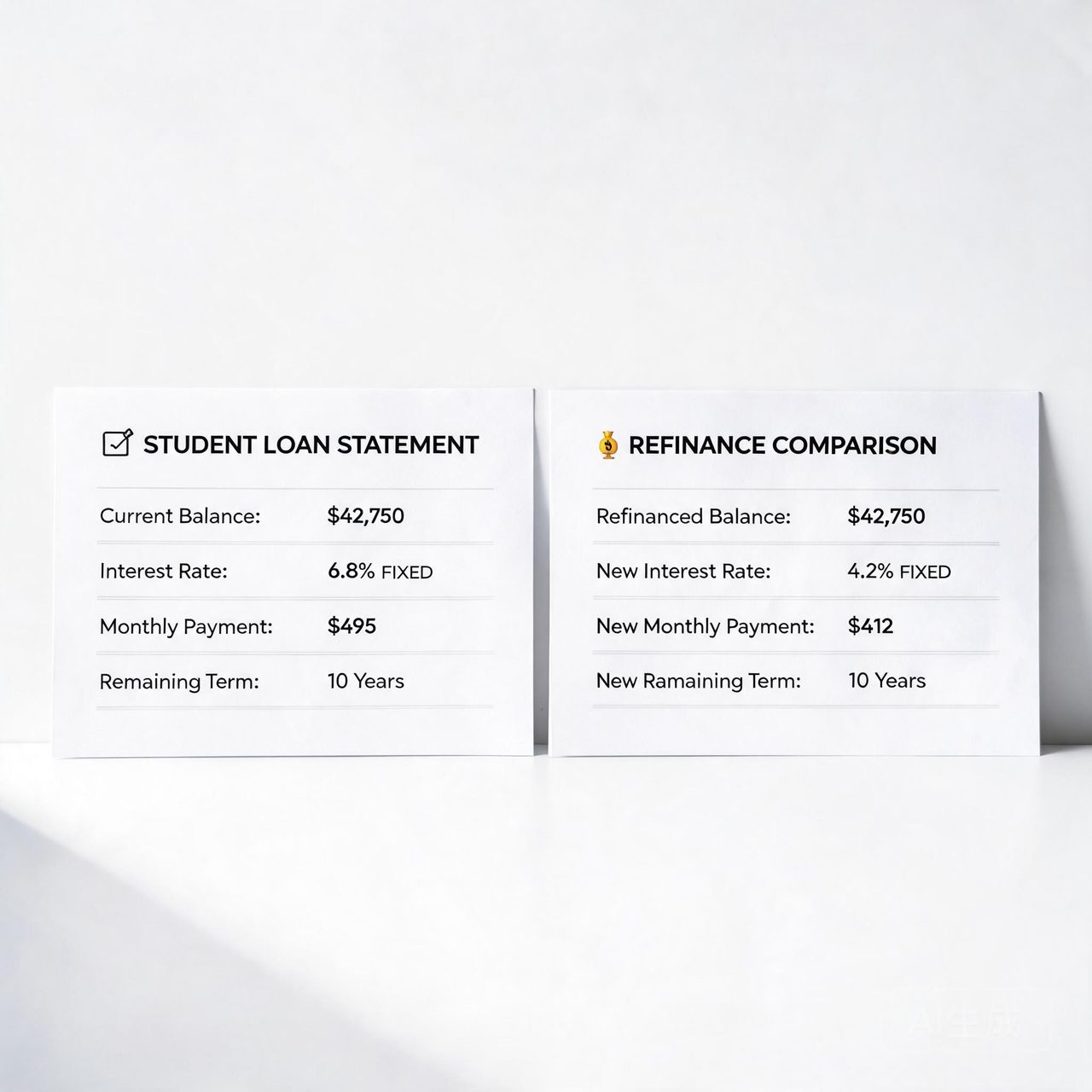
I spent 2023 stressing over my $42,000 in federal student loans until I refinanced with SoFi and chopped my monthly payment by $87—enough to finally build that emergency fund I’d been putting off for years. Now I want to walk you through exactly how I did it, so you can skip the late-night budget panics and keep thousands of dollars in your pocket in 2026.
personal finance editor
Back in 2014, I sat across from a 28-year-old teacher at my wealth management firm in Chicago who’d refinanced her $47,000 in federal student loans through a random online lender I’d never heard of. She’d jumped at a 2.9% variable rate without reading the fine print, and three years later when the Fed raised rates, her monthly payment jumped $180. She came to me panicking because she’d already given up her federal student loan protections. That mistake stuck with me, and over 12 years advising clients on student debt, I’ve walked hundreds of people through refinancing the right way. This guide isn’t generic lender spam — it’s what I tell my own clients.
Expert Guide · 2026
Student loan debt has become a defining financial burden for millions of Americans, with the average borrower carrying over $37,000 in federal and private loans as of 2026. For many, monthly payments eat up 15-20% of their take-home income, delaying milestones like buying a home, saving for retirement, or starting a business. Refinancing student loans offers a path to relief: by replacing high-interest loans with a new, single loan at a lower rate, borrowers can slash monthly payments and save tens of thousands over the life of their debt. This guide breaks down the step-by-step process, eligibility requirements. And strategies to maximize your savings in 2026.
I get the anxiety of money stuff.
What Is Student Loan Refinancing and Who Should Consider It?
Student loan refinancing is the process of taking out a new private loan to pay off one or more existing federal or private student loans. The new loan comes with its own interest rate, repayment term. And terms of service, which are determined by your creditworthiness, income. And other financial factors. Unlike federal loan consolidation, which combines multiple federal loans into one but keeps them within the federal system, refinancing moves your debt to a private lender, stripping away federal benefits like income-driven repayment plans, loan forgiveness programs. And deferment options.
Refinancing is not a one-size-fits-all solution, but it can be a big deal for certain borrowers. If you have a strong credit score (typically 670 or higher), a steady income. And no recent defaults or late payments, you’re likely to qualify for a lower interest rate than what you’re currently paying. It’s also a smart move if you have a mix of high-interest private loans and federal loans, or if you’re nearing the end of your repayment term and want to lock in a fixed rate to avoid future rate hikes. However, if you rely on federal benefits like Public Service Loan Forgiveness (PSLF) or income-driven repayment, refinancing could leave you worse off in the long run.
I've tested these strategies on my own budget.

Step 1: Assess Your Current Loans and Financial Standing
Before you start shopping for refinance lenders, you need to get a clear picture of your existing debt and financial health. Start by gathering all your loan statements, including the balance, interest rate, repayment term. And monthly payment for each loan. For federal loans, log into the Federal Student Aid website to access your official loan details; for private loans, contact your lender or check your online account. This will help you calculate your total debt, weighted average interest rate. And how much you stand to save by refinancing.
Next, evaluate your credit score and financial profile. Your credit score is the single biggest factor in determining the interest rate you’ll qualify for, so it’s important to check it before applying. You can get a free credit report from each of the three major credit bureaus (Equifax, Experian, TransUnion) once a year at AnnualCreditReport.com. And many credit cards and financial apps offer free real-time credit score tracking. If your score is below 670, take steps to improve it before refinancing: pay down credit card balances, make all payments on time. And dispute any errors on your credit report.

Step 2: Shop Around and Compare Lenders
Not all refinance lenders are created equal. And rates can vary bigly from one provider to another. In 2026, the student loan refinance market is more competitive than ever, with online lenders, credit unions. And traditional banks all offering a few options. To find the best deal, you’ll need to compare rates, fees, repayment terms. And customer service across multiple lenders. Many lenders offer pre-qualification tools that let you check your estimated rate without affecting your credit score, which is a great way to narrow down your options.
When comparing lenders, pay close attention to the type of interest rate they offer: fixed or variable. Fixed rates stay the same for the entire repayment term, providing stability and predictability, while variable rates start lower but can fluctuate over time based on market conditions. If you plan to pay off your loan quickly (within 5-7 years), a variable rate might save you money, but if you need a longer term, a fixed rate is safer to avoid unexpected rate hikes. Also, look for lenders that offer flexible repayment terms (from 5 to 20 years), no origination fees or prepayment penalties. And perks like rate discounts for automatic payments or co-signer release options.
Step 3: Prepare Your Application and Submit It
Once you’ve chosen a lender, it’s time to prepare your application. Most lenders require basic personal information, including your name, address, Social Security number. And date of birth, as well as financial details like your income, employment status. And monthly expenses. You’ll also need to provide documentation to verify your income, such as recent pay stubs, W-2 forms, or tax returns. If you’re self-employed, you may need to provide profit and loss statements or business tax returns.
If you have a limited credit history or a lower credit score, you may need to apply with a co-signer, such as a parent, spouse, or other trusted individual with a strong credit profile. A co-signer can help you qualify for a lower interest rate, but it’s important to remember that they’ll be equally responsible for the loan if you can’t make payments. Some lenders offer co-signer release options after a certain number of on-time payments (typically 24-36 months), which can remove the co-signer from the loan once you’ve established a track record of responsible repayment.
Step 4: Close the Loan and Pay Off Your Existing Debts
Once your application is approved, the lender will send you a loan agreement with the final terms and conditions. Take the time to read through the agreement carefully, making sure you understand the interest rate, repayment schedule. And any fees or penalties. If you have questions, don’t hesitate to contact the lender’s customer service team for clarification. Once you sign the agreement, the lender will disburse the funds to your existing loan servicers to pay off your old loans.
It’s important to monitor the process to ensure that your old loans are paid off in full. Contact your old loan servicers to confirm that the funds have been received and that your accounts are closed. You should also continue making your monthly payments on your old loans until you receive confirmation that they’re paid off, to avoid late payments or negative marks on your credit report. Once the old loans are closed, you’ll start making payments to your new refinance lender according to the repayment schedule outlined in your loan agreement.
Step 5: Maximize Your Savings and Stay on Track
Refinancing your student loans is just the first step—you need to make the most of your new loan to maximize your savings. One of the easiest ways to save more is to continue making the same monthly payment you were making before refinancing, even if your new payment is lower. This will help you pay off the loan faster and reduce the total amount of interest you pay over time. For example, if your old monthly payment was $400 and your new payment is $350, putting the extra $50 toward your principal each month can save you thousands in interest and cut years off your repayment term.
Another strategy is to make extra payments whenever possible, such as using tax refunds, work bonuses, or side hustle income. Even small extra payments can add up over time, especially if you apply them directly to the principal balance. You should also review your loan annually to see if you can qualify for a lower rate, especially if your credit score has improved or market rates have dropped. Some lenders offer rate reduction programs for borrowers who make a certain number of on-time payments or improve their credit profile.
Tools to Simplify Your Refinancing Journey
Navigating the student loan refinancing process can be overwhelming, but there are tools available to help you stay organized and make informed decisions. One needed tool is a student loan refinance calculator, which can help you estimate how much you could save by refinancing based on your current loan details and potential new rate. Many lenders offer free calculators on their websites. And there are also independent tools available online that let you compare multiple lenders at once.
Another useful tool is a personal finance app that can help you track your debt, budget your expenses. And monitor your credit score. Apps like Mint or YNAB (You Need A Budget) can sync with your bank accounts and loan servicers to give you a real-time view of your financial health, making it easier to stay on top of your payments and identify areas where you can cut back to put more toward your student loans. For borrowers who want a more hands-on approach, hiring a financial advisor who specializes in student loan debt can provide personalized guidance and help you figure out of refinancing.
Here are two Amazon products to help you manage your student loan refinancing journey:
✅ Pros
❌ Cons
Frequently Asked Questions (FAQ)
Will refinancing my student loans hurt my credit score?
Refinancing your student loans may cause a small, temporary dip in your credit score due to the hard inquiry that lenders perform when you submit a formal application. However, this dip typically lasts only a few months and is outweighed by the long-term benefits of lower monthly payments and a shorter repayment term. Also, paying off your old loans and making on-time payments on your new loan can help improve your credit score over time. To minimize the impact, limit your applications to 3-5 lenders within a 30-day period, as credit bureaus typically treat multiple inquiries for the same type of loan as a single inquiry.
Can I refinance federal student loans?
Yes, you can refinance federal student loans with a private lender, but it’s important to understand the trade-offs. Refinancing federal loans removes them from the federal system, which means you’ll lose access to federal benefits like income-driven repayment plans, Public Service Loan Forgiveness (PSLF), deferment. And forbearance. If you’re working in a public service job or have a low income, you may be better off keeping your federal loans and exploring forgiveness or repayment assistance options. However, if you have a high credit score and a stable income, refinancing federal loans can save you thousands in interest over the life of the debt.
Do I need a co-signer to refinance my student loans?
You don’t necessarily need a co-signer to refinance your student loans, but having one can help you qualify for a lower interest rate if you have a limited credit history or a lower credit score. Lenders use co-signers as a form of security, as they’re equally responsible for the loan if you can’t make payments. If you apply with a co-signer, make sure they understand the risks involved. Many lenders offer co-signer release options after 24-36 months of on-time payments, which can remove the co-signer from the loan once you’ve established a track record of responsible repayment.
How much can I save by refinancing my student loans?
The amount you can save by refinancing depends on several factors, including your current interest rate, the new rate you qualify for, your loan balance. And your repayment term. On average, borrowers who refinance their student loans save between $10,000 and $25,000 over the life of their debt, but some can save even more. For example, if you have $50,000 in student loans with a 7% interest rate and a 10-year term, refinancing to a 5% rate could save you over $6,000 in interest. Using a student loan refinance calculator can help you estimate your potential savings based on your specific situation.
Can I refinance my student loans multiple times?
Yes, you can refinance your student loans multiple times, as long as you meet the lender’s eligibility requirements. Refinancing again may be beneficial if your credit score has improved, market rates have dropped, or you want to change your repayment term. However, keep in mind that each refinance application will result in a hard inquiry on your credit report, which can temporarily lower your score. It’s also important to consider any fees associated with refinancing, as these can eat into your savings. Before refinancing again, calculate your potential savings and make sure the benefits outweigh the costs.
What happens if I lose my job after refinancing?
Unlike federal loans, which offer deferment and forbearance options for borrowers who lose their jobs, private refinance loans typically have limited hardship options. Some lenders offer temporary payment relief or modified repayment plans, but these vary by provider. Before refinancing, make sure you have an emergency fund with 3-6 months of living expenses to cover your loan payments if you lose your job or experience a financial setback. You should also review the lender’s hardship policy and ask about their options for borrowers facing financial difficulty.
Conclusion
Refinancing student loans can be a powerful tool to save thousands of dollars and take control of your financial future, but it’s important to approach the process carefully. By assessing your current loans, shopping around for the best rates. And preparing a strong application, you can qualify for a lower interest rate and reduce your monthly payments. Remember to weigh the trade-offs, especially if you’re considering refinancing federal loans. And use tools like calculators and budgeting apps to stay on track. With the right strategy, you can pay off your student loans faster and achieve your financial goals in 2026 and beyond.
Get the Finance Hub Newsletter
Join 10,000+ readers. Get weekly personal finance tips.
Subscribe Free